Waxoul is a performance born from a dialogue between a father and his son: Senegalese painter Cheikh Tidiane Diagne and author and theatre director Lamine Diagne.
Rooted in a family history connected to the Senegalese Tirailleurs, the project unfolds as a contemporary ritual — an attempt to approach an unfinished memory, transmitted through fragments, silences, and survivals.
On stage, a large canvas becomes a living territory.
Archives appear, disappear, and freeze. Painting emerges in real time, transforming images of the past into present gestures. The voice circulates, weaving together intimate narratives, historical memory, and the calling of lineages.
Gradually, the canvas gathers traces.
The voice multiplies.
Time begins to overlap.
Between performance, painting, and living ceremony, the work seeks less to recount history than to slow it down — to look at what remains within us, what continues to speak despite silence.
Developed with the support of the Haus der Kulturen der Welt in Berlin, the project will present its first public stage on March 21, 2026, within the exhibition Tirailleurs — Trials and Tribulations, before continuing its evolution across theatres, exhibition spaces, and non-conventional venues.
« We were on the island of Gorée, off the coast of Dakar: my father, Kalidou — my younger brother who has never left Senegal — my sister, whom I met when we were already adults — the four of us forming this unlikely recomposed family, sitting together, eating and drinking as we looked out toward the port of Gorée.
My father — this reserved man who never gives anything away when I press him with questions about his childhood, his journey, and the parallel life he led before becoming the painter he is today — that very man, my father (!), suddenly opened himself to his children on the Island of No Return. For two hours, he told us his story.
I had never heard so much before.
The gentleness of that evening, the depth of our listening, the tender light he cast upon his own history and upon the shadows of the past awakened in me the desire to invite my father onto the stage — into a space where speech and painting could enter into dialogue.
This man who approaches the canvas with brushes, markers, sometimes even his fingernails, whose painting I have seen move from chaos toward light, whose works bear titles inspired by justice and by the urgencies of our time — I wanted to offer him a space of presence and storytelling.
That evening, on the island of Gorée, the desire was born to share publicly what we had finally begun to say to one another. »
Lamine Diagne
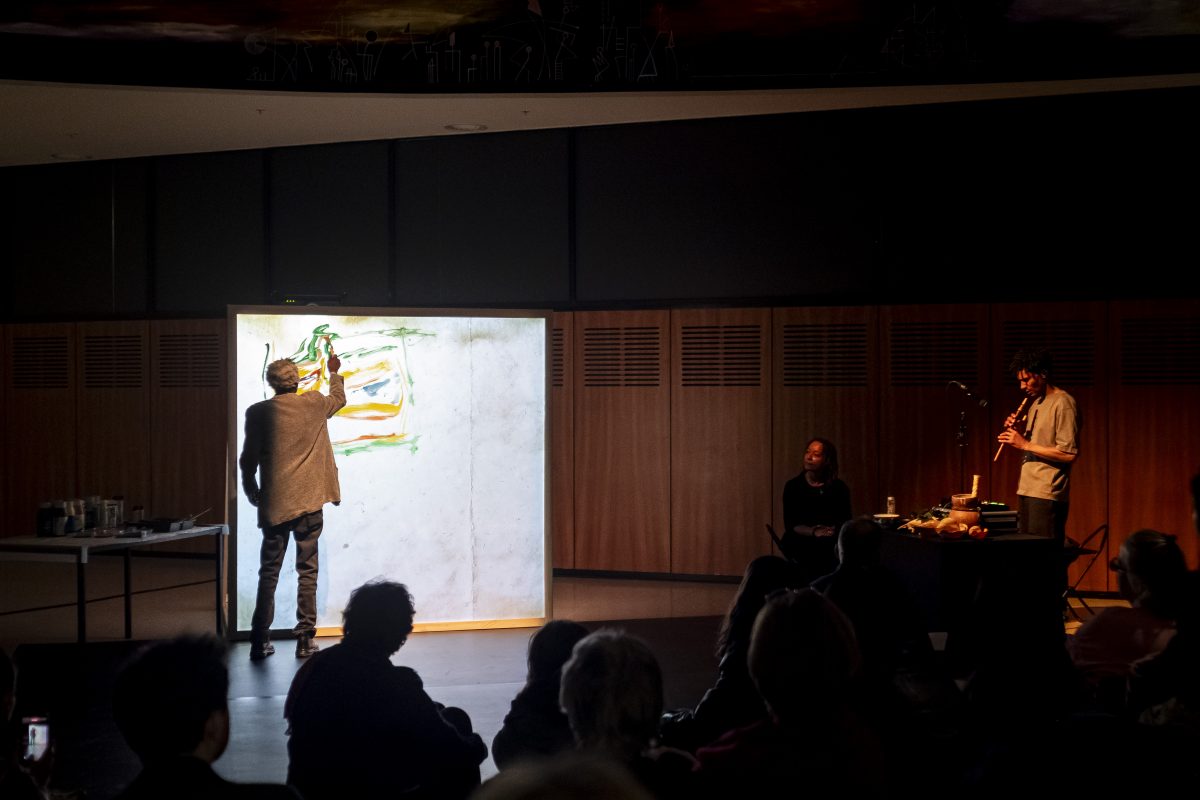
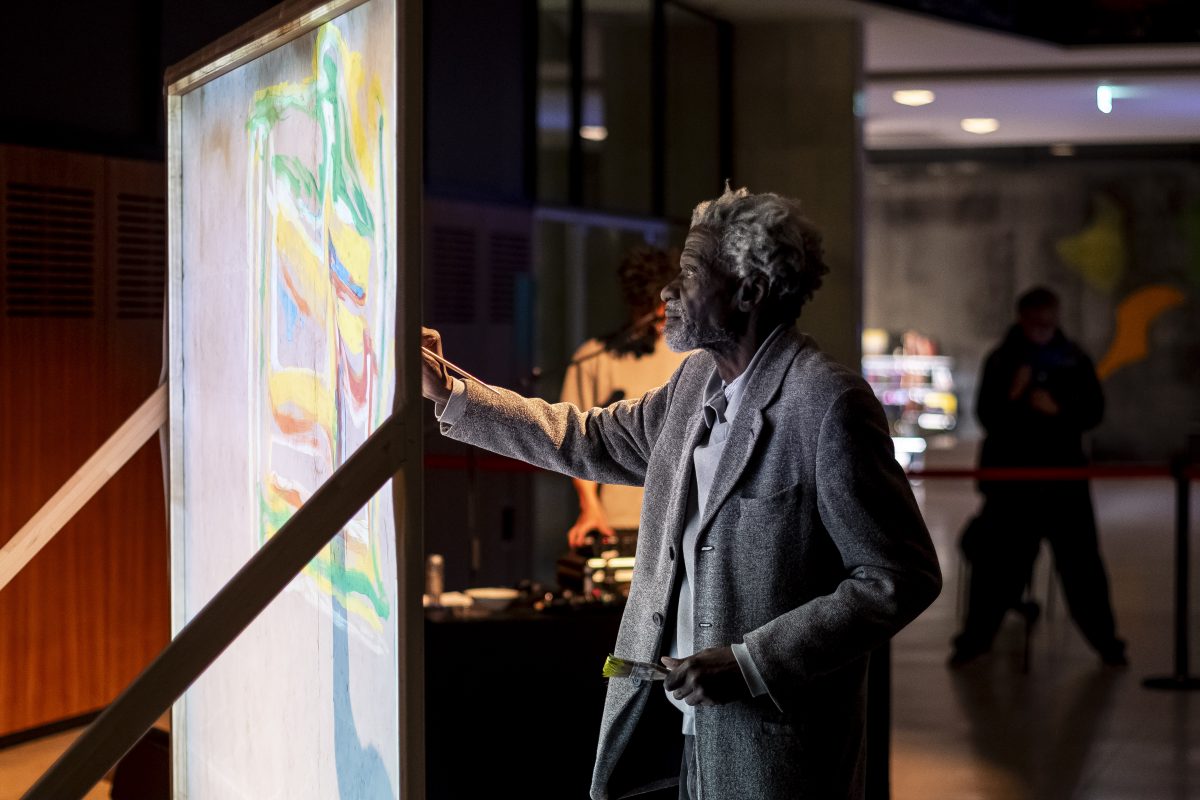
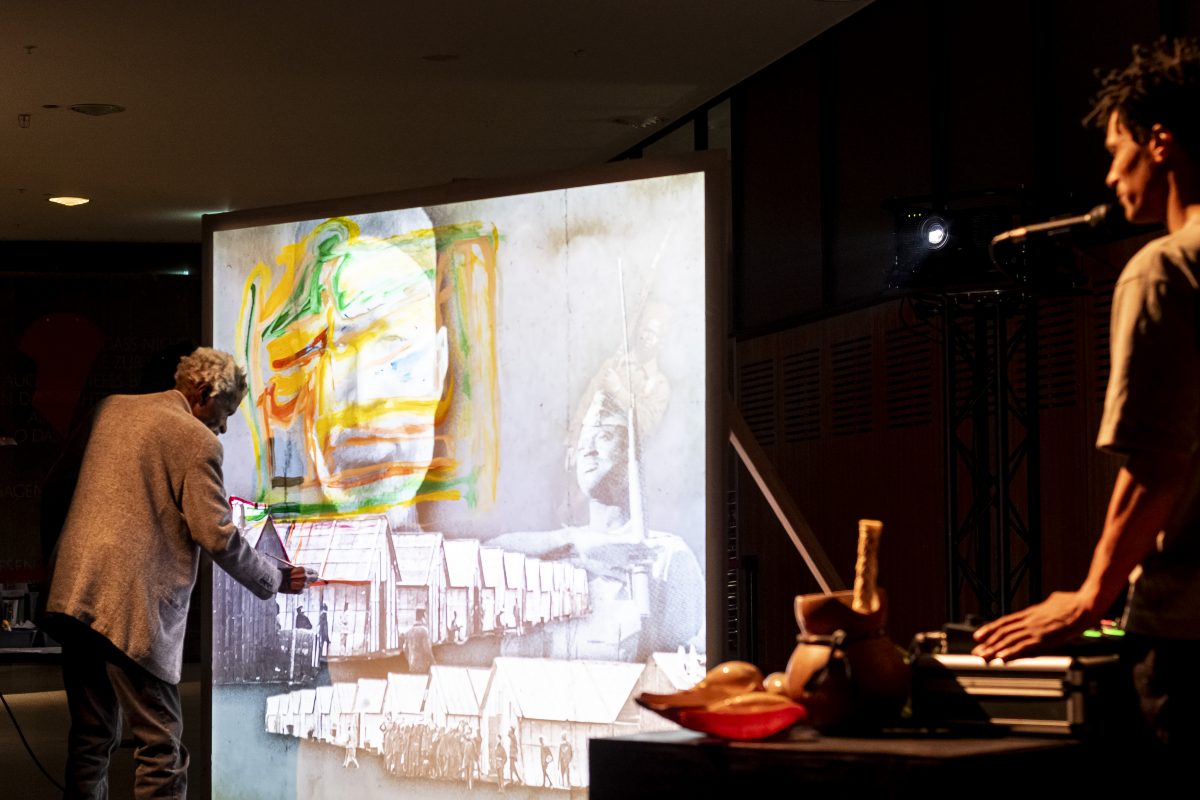
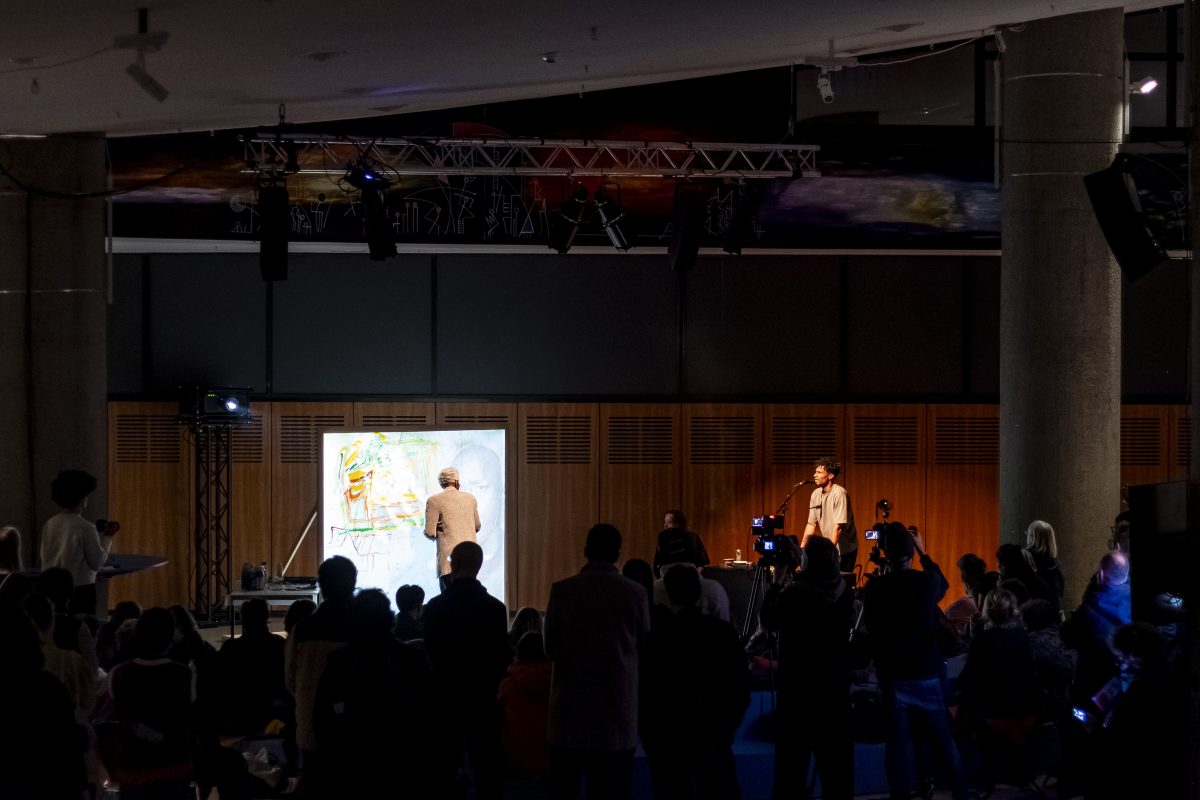
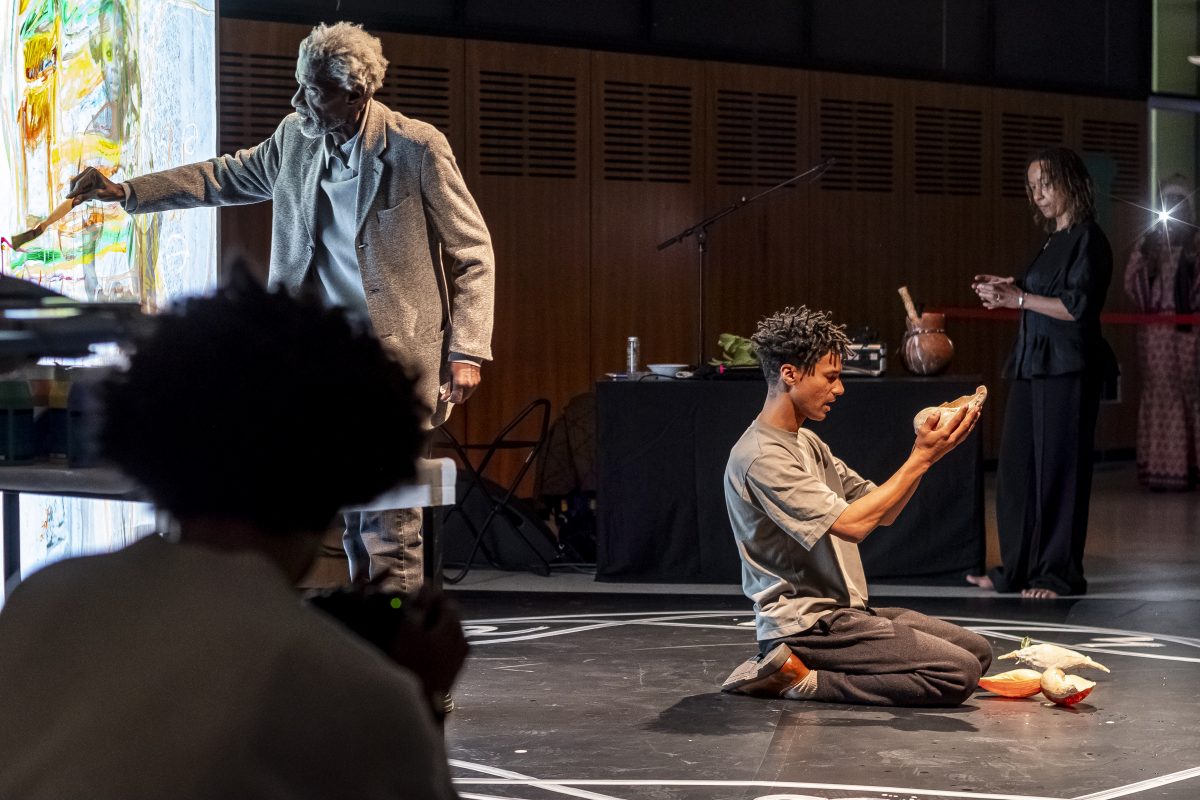
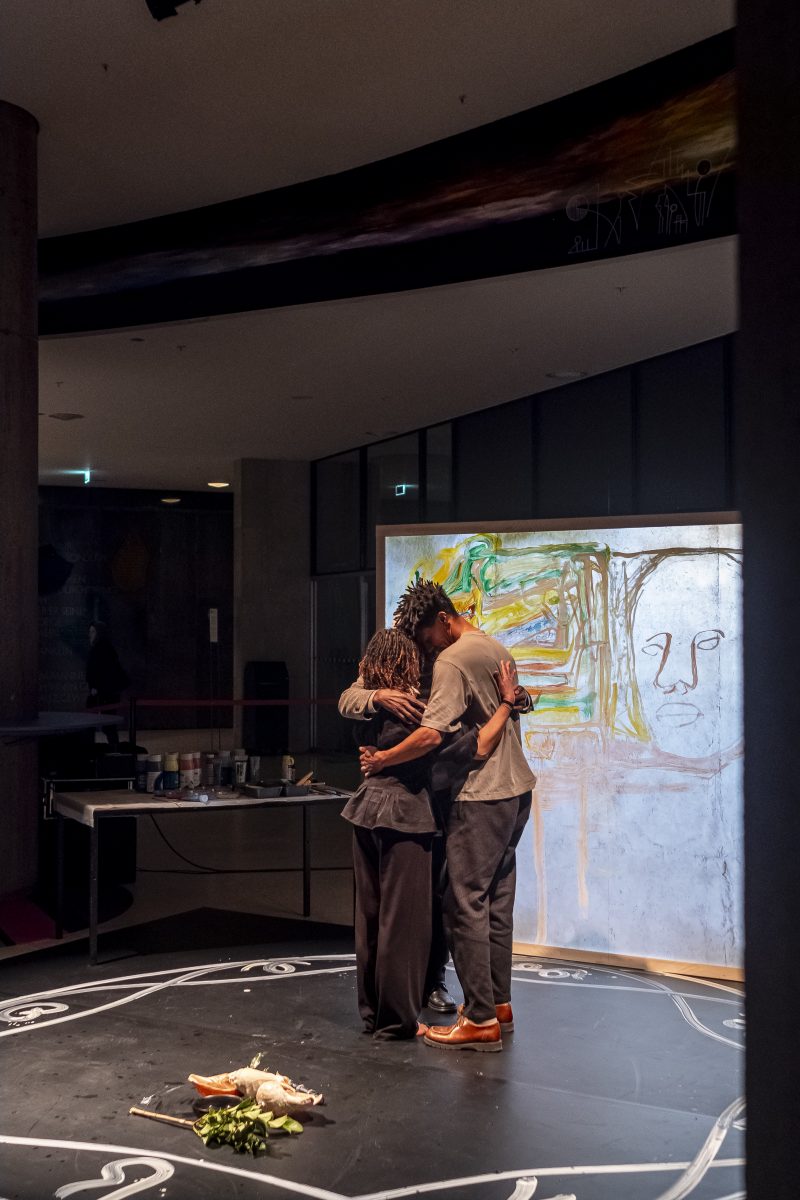
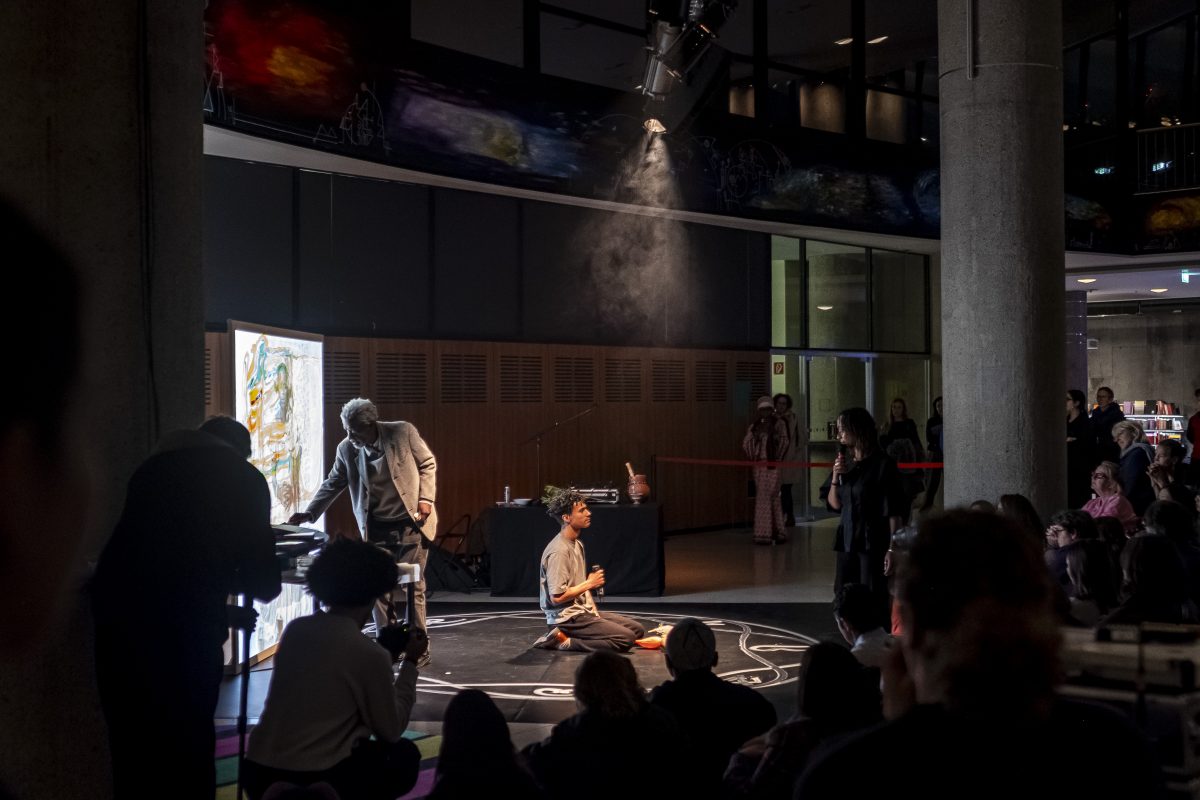
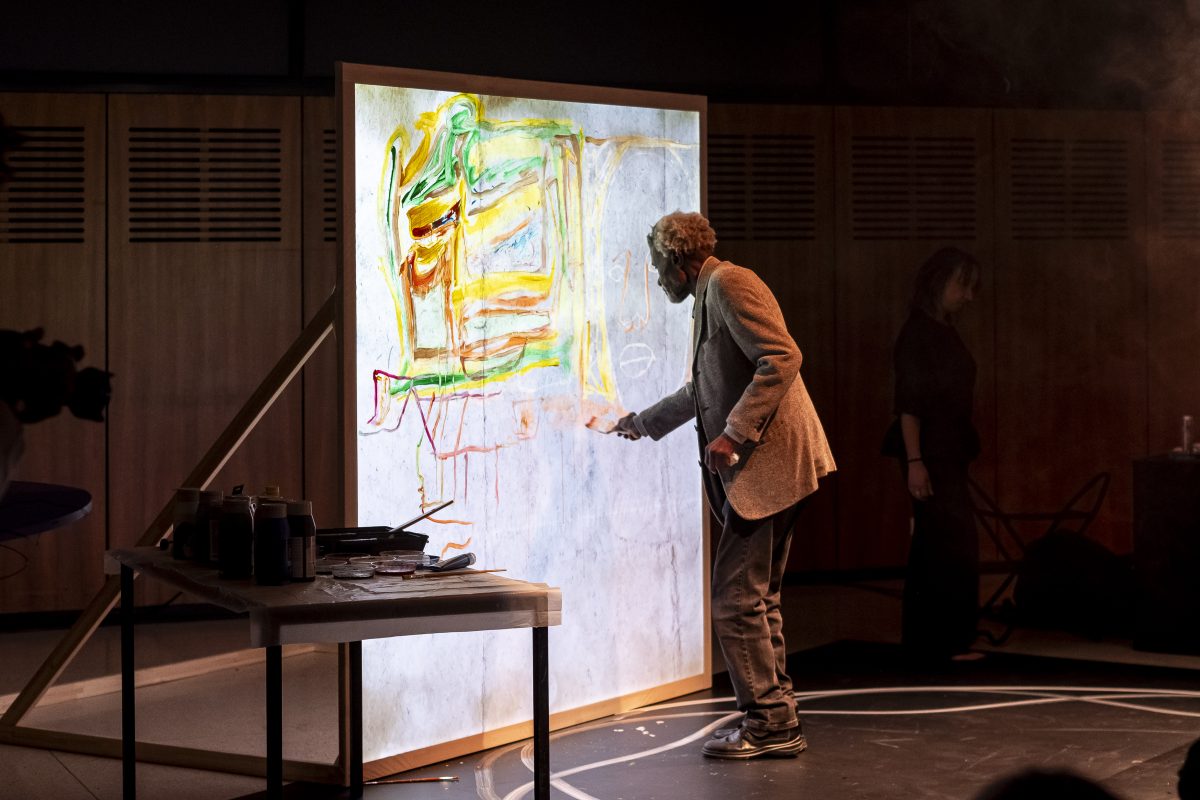
Photos : Mathias Voelzke
Cheikh Tidiane DIAGNE
Painting the World Through Its Fractures
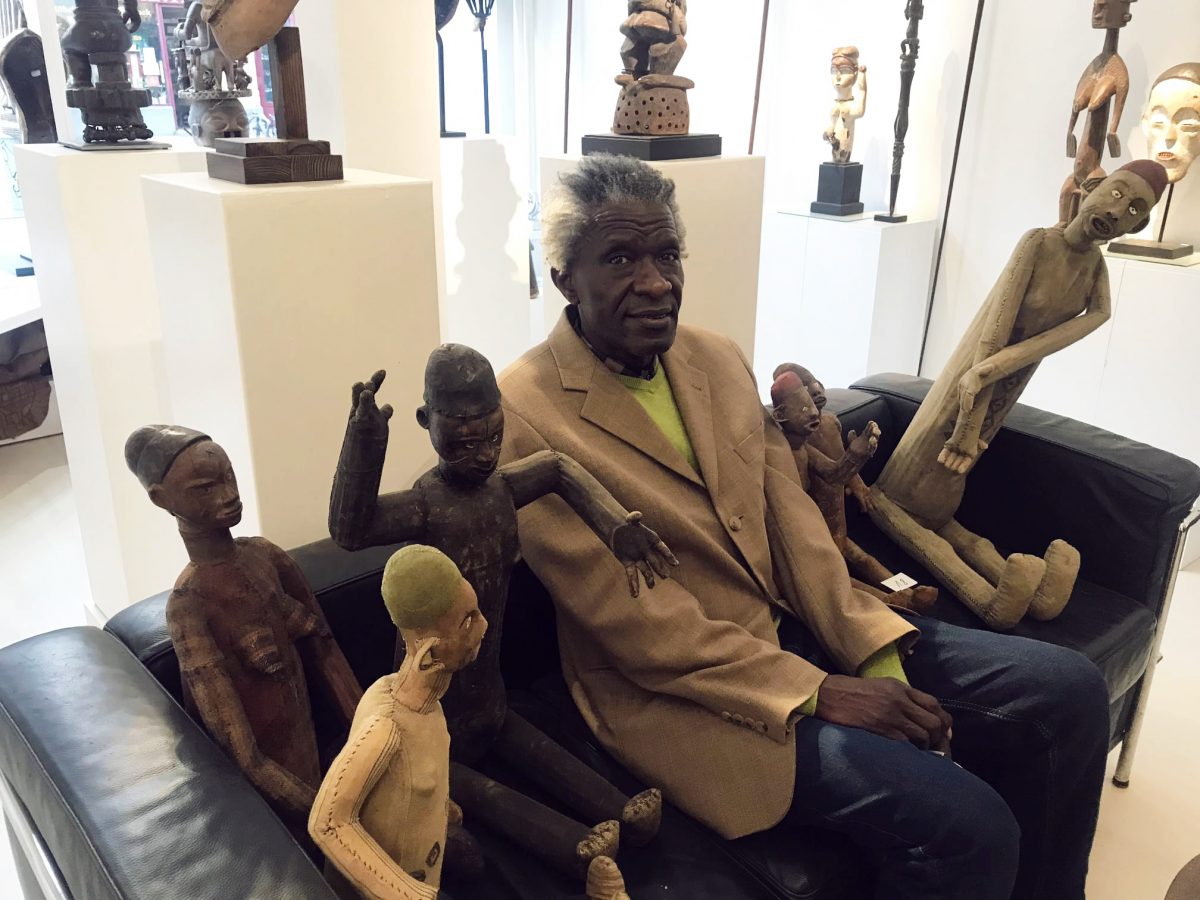
Born in Tivaouane, Senegal, Cheikh Tidiane Diagne belongs to a generation of artists whose trajectories reflect the major displacements of the contemporary world. Trained outside academic institutions and shaped by travel as well as sustained observation of the social and political transformations of his time, he has developed over several decades a singular body of work situated between Africa and Europe.
Based for more than thirty years in Frankfurt am Main while maintaining an active presence in Dakar, Diagne’s practice unfolds within a transnational artistic geography. This dual belonging is neither tension nor nostalgia; it constitutes the very driving force of his painting. His work emerges within an intermediate space where cultures do not oppose one another but continuously recombine.
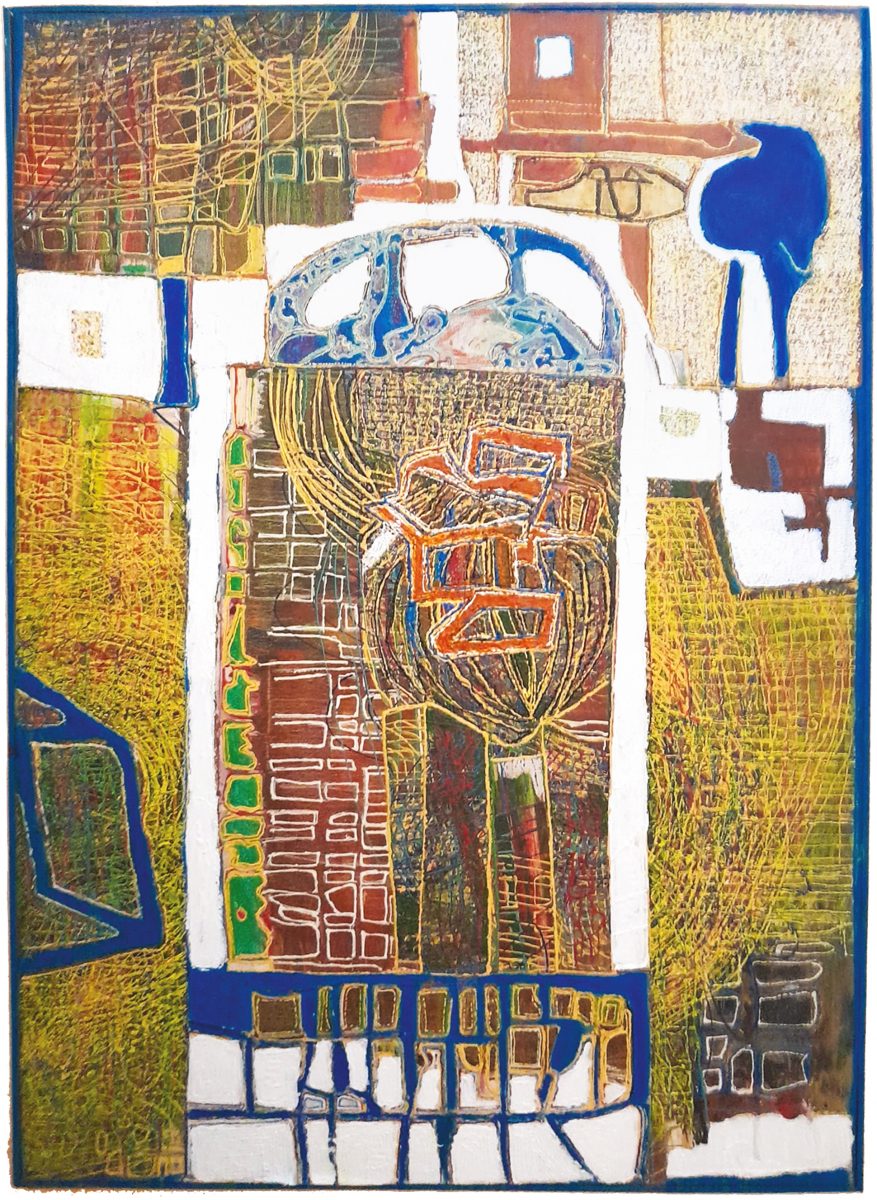
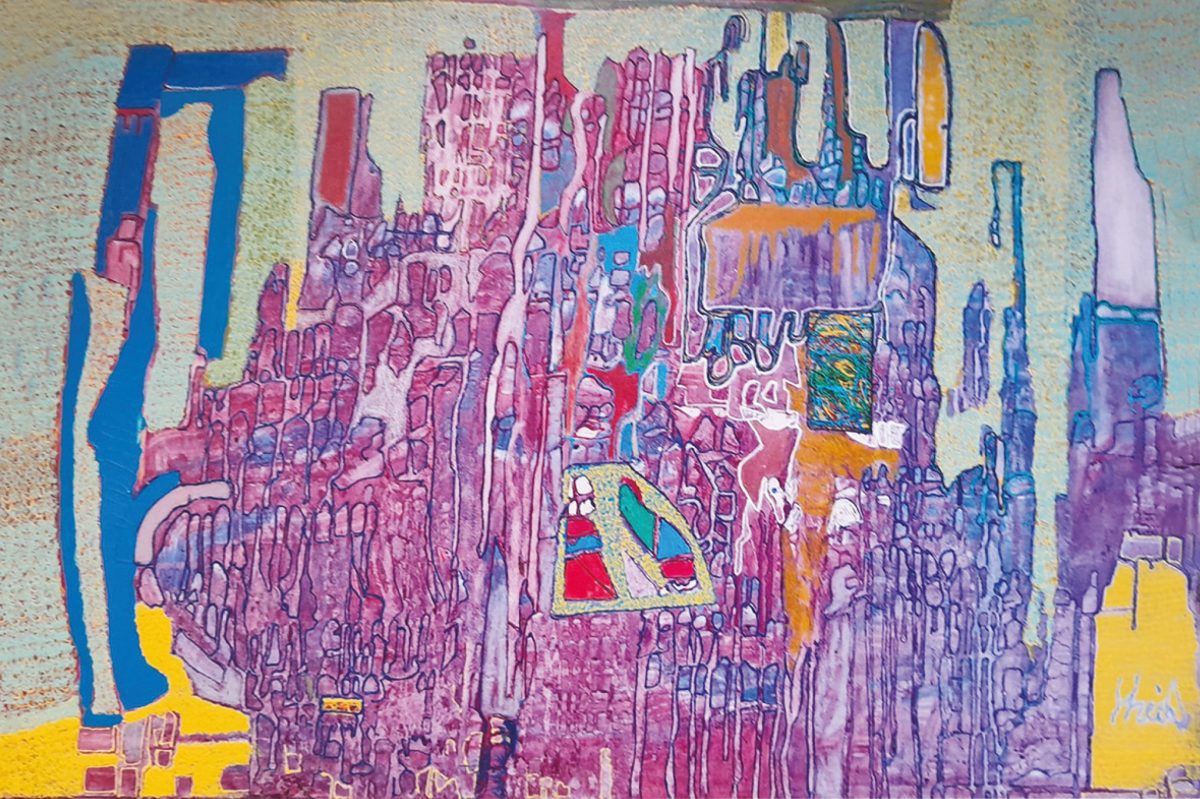
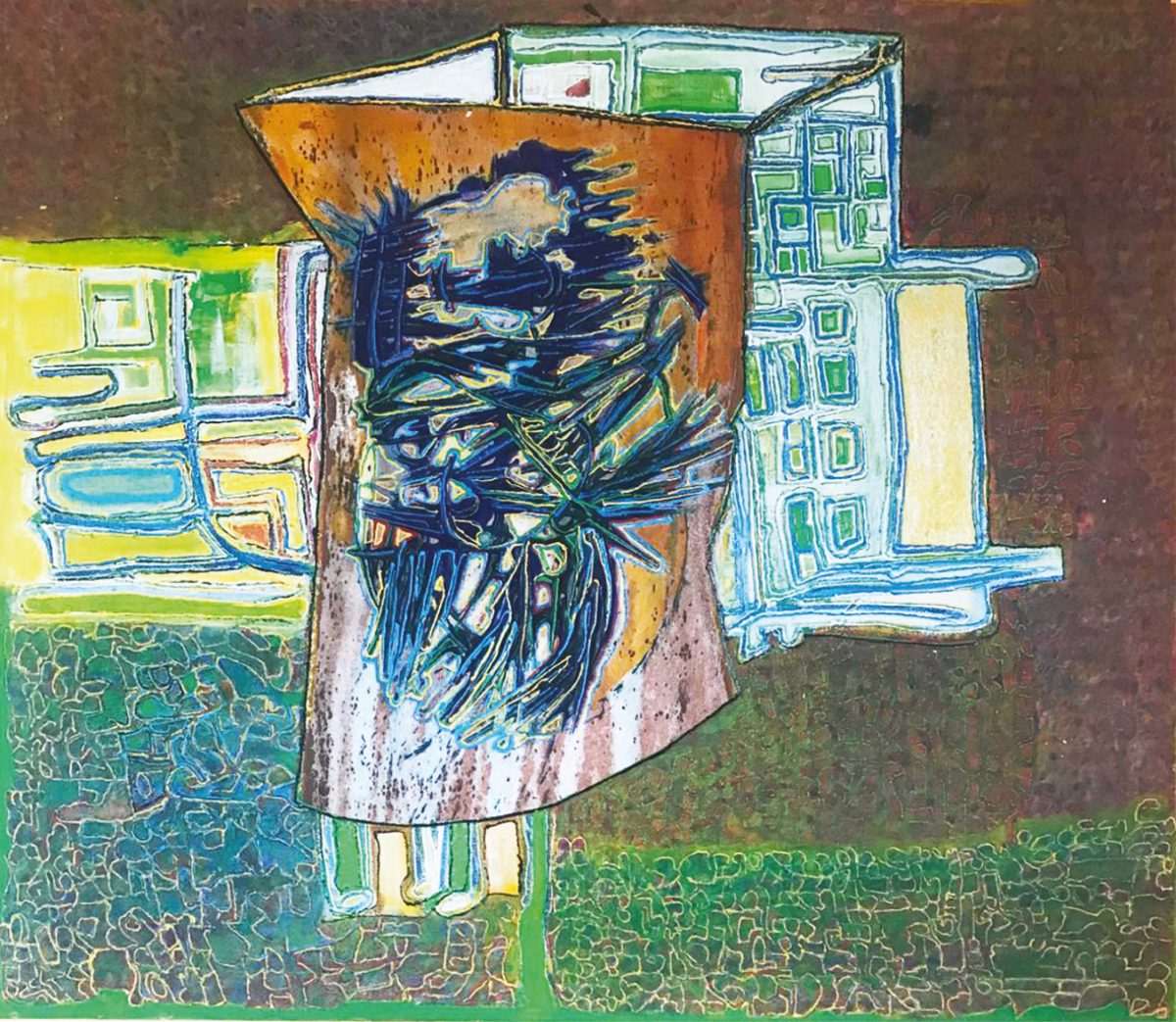
Self-taught, Diagne gradually established an independent artistic language, developed outside dominant aesthetic movements. His paintings reject classical Western perspective in favor of spatial constructions based on accumulation, layering, and coexistence. The pictorial surface becomes an active territory — a field of forces in which signs, figures, and structures interact without hierarchy.
His compositions operate as sensitive cartographies.
They simultaneously evoke urban architectures, fragmented bodies, collective memories, and symbolic systems. Forms appear to aggregate, collide, and interpenetrate, echoing the complex dynamics of a globalized world. Nothing remains fixed; everything circulates, transforms, and resists.
Color occupies a central role in his practice, functioning less as aesthetic effect than as energy. Working with oil, acrylic, and gouache, Diagne draws equally from African textile traditions and modern abstract vocabularies. In his work, color thinks. It connects spaces, sustains tensions, and opens passages between abstraction and figuration.
His oeuvre may be understood as an ongoing meditation on contemporary transformation: migration, accelerated urbanization, colonial inheritances, economic fractures, the coexistence of spiritualities, and the silent violence of modern systems. Without ever illustrating reality, his painting absorbs its underlying vibrations.
The figures emerging from his canvases — hybrid, sometimes anthropomorphic, sometimes architectural — seem to carry the memory of societies shaped by history. They testify to an acute awareness of the world while embodying a patient wisdom formed through time, experience, and critical distance.
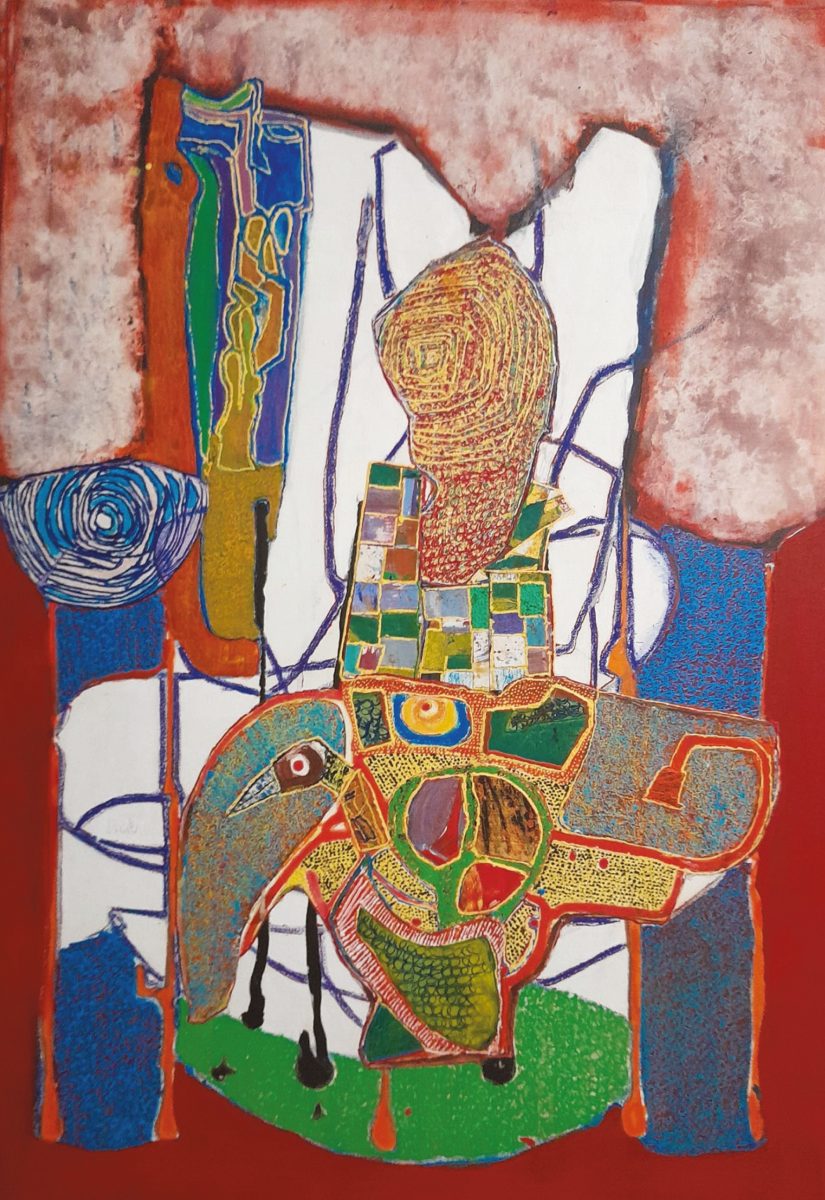
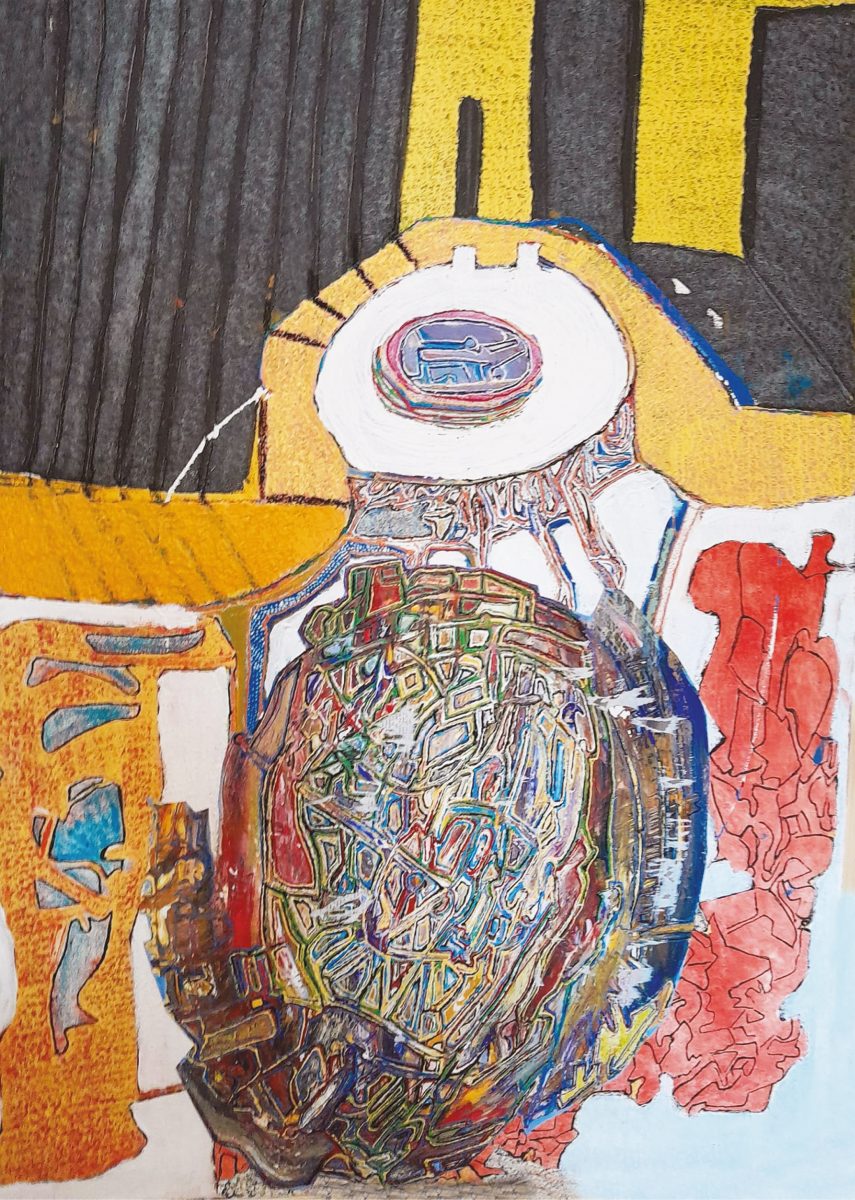
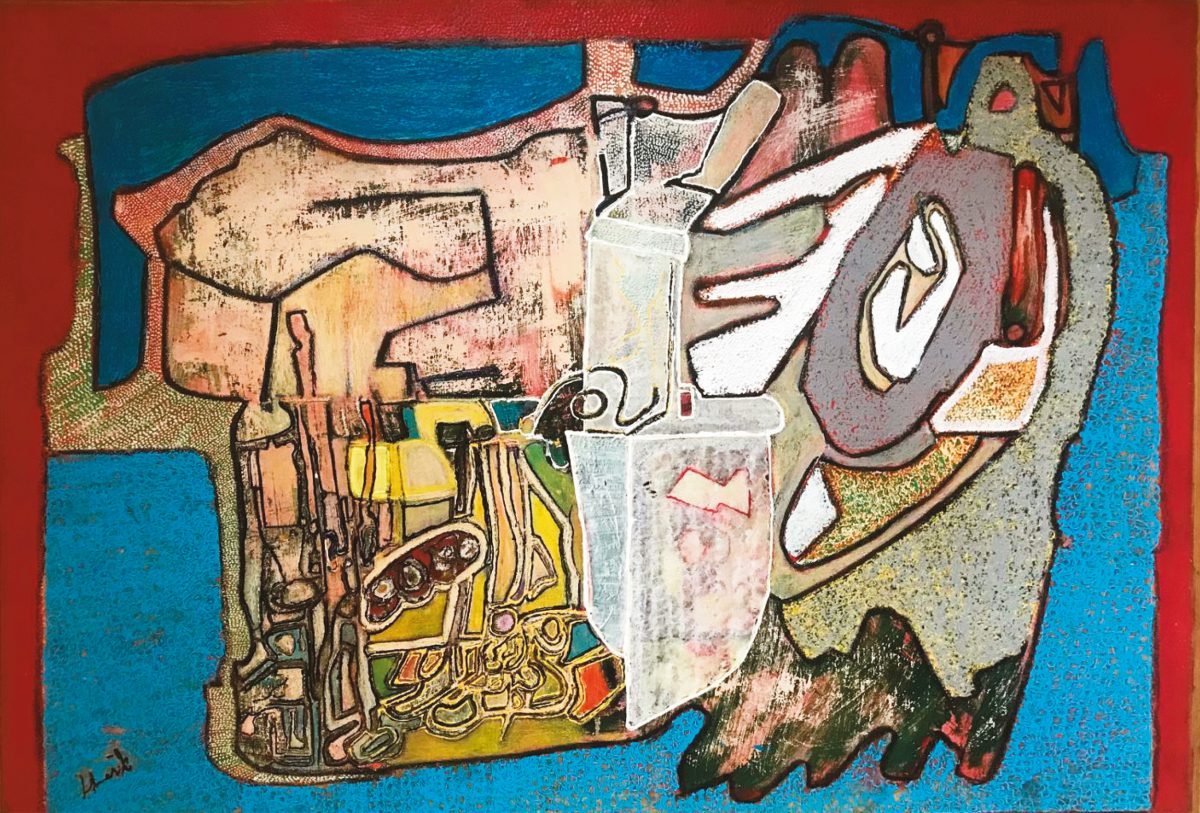
This dimension gives his work a universal resonance.
Rather than asserting a fixed identity, Diagne constructs a visual philosophy of passage. His paintings become sites of negotiation between tradition and modernity, spirituality and materiality, South and North.
Presented in numerous international exhibitions since the 1990s — in Germany, France, and Senegal, notably within the Dak’Art Biennale and the World Festival of Black Arts — his trajectory reflects remarkable continuity and profound artistic maturation.
Today, Cheikh Tidiane Diagne’s work resonates with renewed clarity. At a moment when contemporary art reconfigures its narratives and expands its geographies, his practice fully participates in a global understanding of artistic production: one shaped from active margins rather than established centers.
His painting does not seek to explain the world.
It reveals its invisible strata.
It proposes another way of inhabiting the present.
